 11
11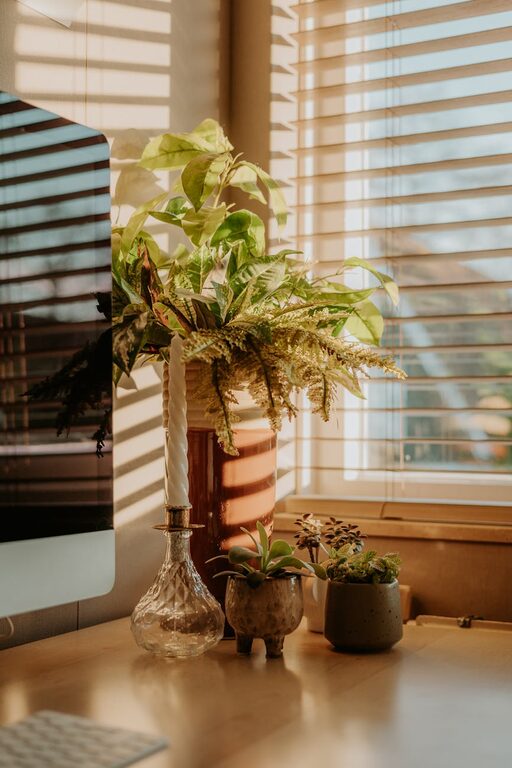
Creating a home office that is both relaxing and productive is essential in today’s work culture. Whether you’re working remotely full-time or occasionally using a space in your home, the environment you create has a major impact on your focus, motivation, and overall wellbeing. This guide offers clear and achievable tips to help you build a workspace that supports both efficiency and calm.
A well-designed home office can improve concentration, reduce stress, and increase job satisfaction. On the other hand, a cluttered or uninspiring space can lead to distractions and fatigue. The goal is to create an environment that invites productivity while providing a peaceful atmosphere so you can recharge during breaks.
—
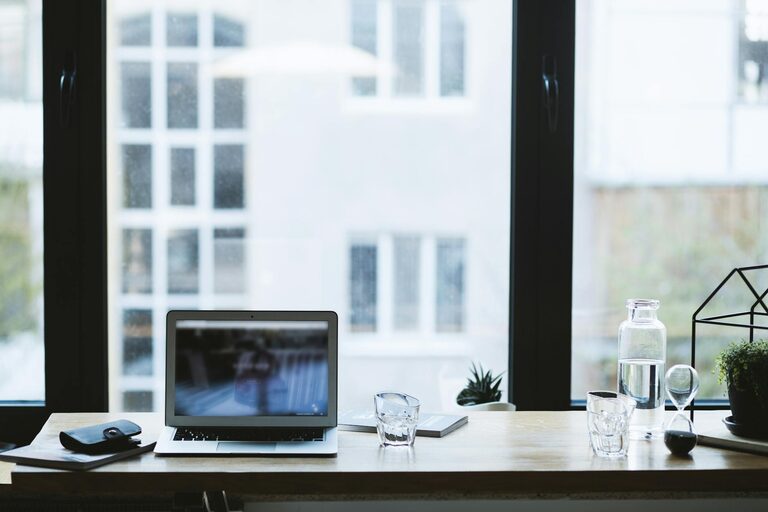
Position your desk near a window if possible. Natural light improves mood and alertness. Avoid placing your screen directly opposite the window to prevent glare.
Select a room or corner away from high-traffic areas. This helps reduce noise interruptions and fosters focus. If complete separation isn’t possible, using noise-cancelling headphones or white noise machines can help.
Make sure there’s enough room to stretch or change positions throughout the day. Standing desks or adjustable chairs can encourage movement, which benefits both comfort and productivity.
—
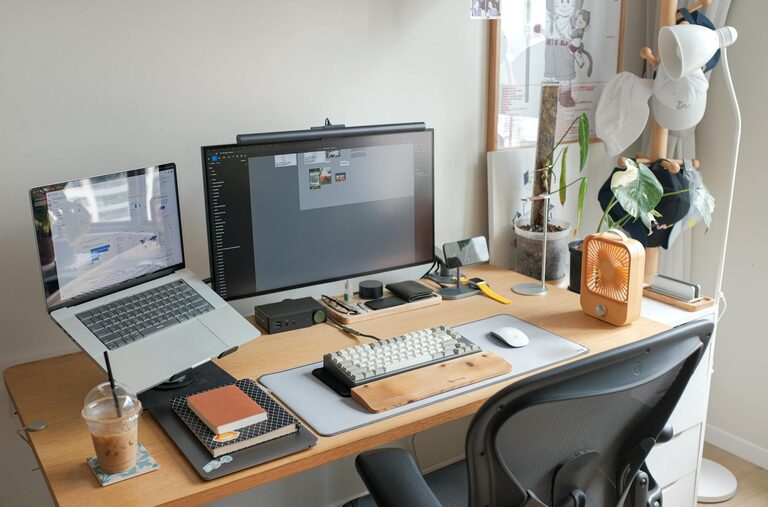
Keep your desk tidy by only having daily essentials on it. Use organisers for stationery, files, and tech accessories to minimise distractions.
Invest in shelves, drawers, or filing cabinets to store documents and equipment. This allows you to maintain a clean surface and quickly find what you need when working.
Untangle and hide cables with clips or boxes. A neat desk reduces visual noise and potential hazards.
—
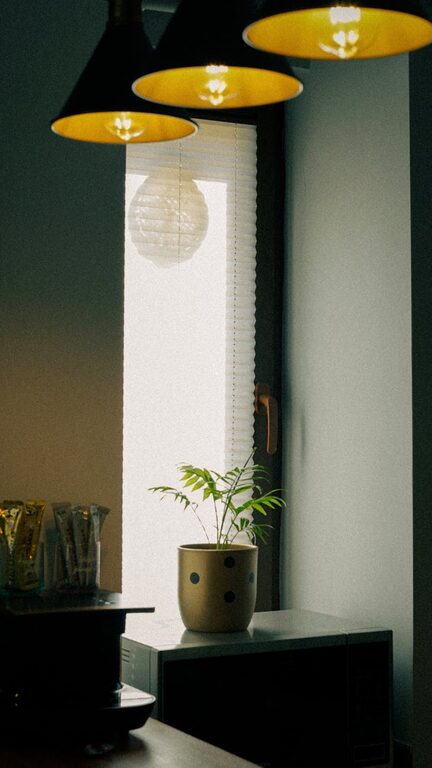
Combine different types of light — ambient (general), task (focused), and accent (decorative) — to avoid eye strain and create a pleasant mood.
Use desk lamps with adjustable brightness or colour temperature. Cooler light tones can energise you in the morning, while warmer tones help you wind down later in the day.
—
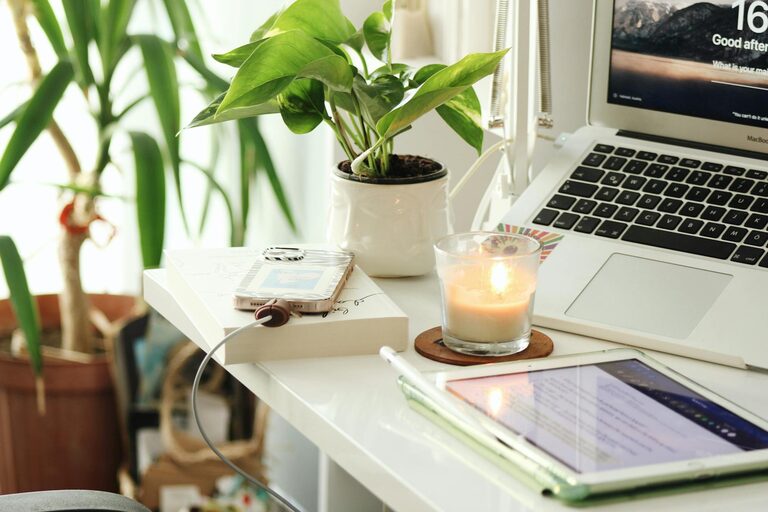
Choose calming, neutral colours such as soft blues, greens, or warm greys to create a soothing backdrop. Personal touches like plants, artwork, or photos foster a sense of ownership and comfort.
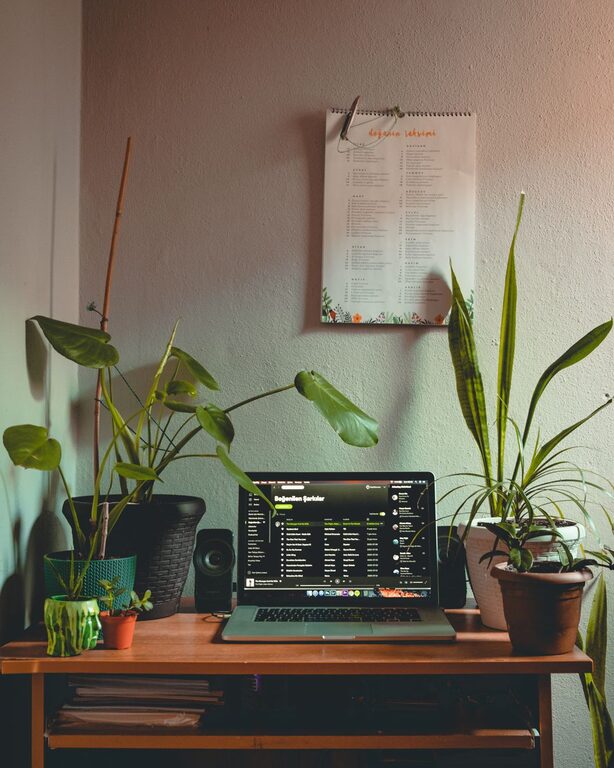
Adding greenery can boost productivity and reduce stress. Easy-to-care-for options like snake plants or succulents are perfect for busy individuals.
—
Choose a supportive chair that encourages good posture. Your desk and chair height should ensure your arms are at a 90-degree angle and feet rest flat on the floor or a footrest.
Position screens at eye level and about an arm’s length away. This reduces neck strain and promotes better focus.
Use reliable devices and fast internet connections to reduce frustration. Regularly update software and keep backups to prevent data loss.
—
Set consistent start and finish times for your workday to help separate your professional and personal lives.
Incorporate short breaks for stretching or walking every hour. This refreshes your mind and body, improving focus for tasks ahead.
Communicate your work hours to family or housemates. Consider putting your phone on silent or using apps to block non-work-related websites during work periods.
—
Creating a relaxing and productive home office environment is a process that combines good organisation, thoughtful design, and habits that support your wellbeing. Small changes like updating lighting, adding plants, or setting clear boundaries can make a significant difference with time. By investing in your workspace, you’re setting yourself up for success and a more enjoyable work-from-home experience.